Customer communication is constantly evolving and now goes far beyond simply sending messages – creating real conversations is increasingly valued. That’s where 2-Way Messaging (or interactive campaigns) comes in, a powerful approach every brand should include in their strategy if they want to build close, personalized and effective relationships with their audience.
In this article, we’ll walk you through everything you need to know about this feature: what it is, how it works, the key benefits, and how to apply it in different contexts to drive higher interaction and results.
What is 2-Way Messaging and why is it important?
2-Way Messaging allows for real-time, two-way communication between a brand and its customer, through SMS. Unlike traditional one-way campaigns where the customer only receives information, here they can reply, interact and keep the conversation going. It’s a powerful tool that turns a simple message into a channel for direct interaction, which not only improves customer experience, but also significantly increases response and conversion rates. Did you know SMS has a return on investment of $21 to $41 for every $1 spent?
Key benefits
Adding 2-Way Messaging to your communication strategy offers multiple advantages:
- Better customer experience: Customers feel heard and valued.
- Higher engagement: Interactivity encourages greater interest and participation.
- Smart automation: You can set up automatic replies for common questions.
- Lower customer support costs: A big part of your support can be managed via SMS.
- Greater operational efficiency: Confirm appointments, manage bookings, or collect data without the need for immediate human intervention.
- Faster conversions: Immediate replies help guide users in real-time through your sales funnel.
Practical use cases
You can use 2-Way Messaging across a variety of scenarios. Here are some real-world examples:
1. Appointment and booking confirmations
Send an SMS asking to confirm a scheduled appointment: “You have an appointment tomorrow at 3:00 PM. Reply YES to confirm or NO to reschedule.” Based on the reply, the platform can automatically register the confirmation or suggest new time slots.
2. Interactive promotional campaigns
“Which product category would you like to see on sale this week? Reply with: 1 – Tech 2 – Fashion 3 – Sports”. Depending on the response, you can send a second SMS with a personalized offer.
3. Post-purchase feedback (NPS surveys)
“Rate your experience with us from 1 to 5. Reply to this SMS with your score.”. An easy and effective way to measure satisfaction and collect valuable feedback.
4. Delivery and logistics updates
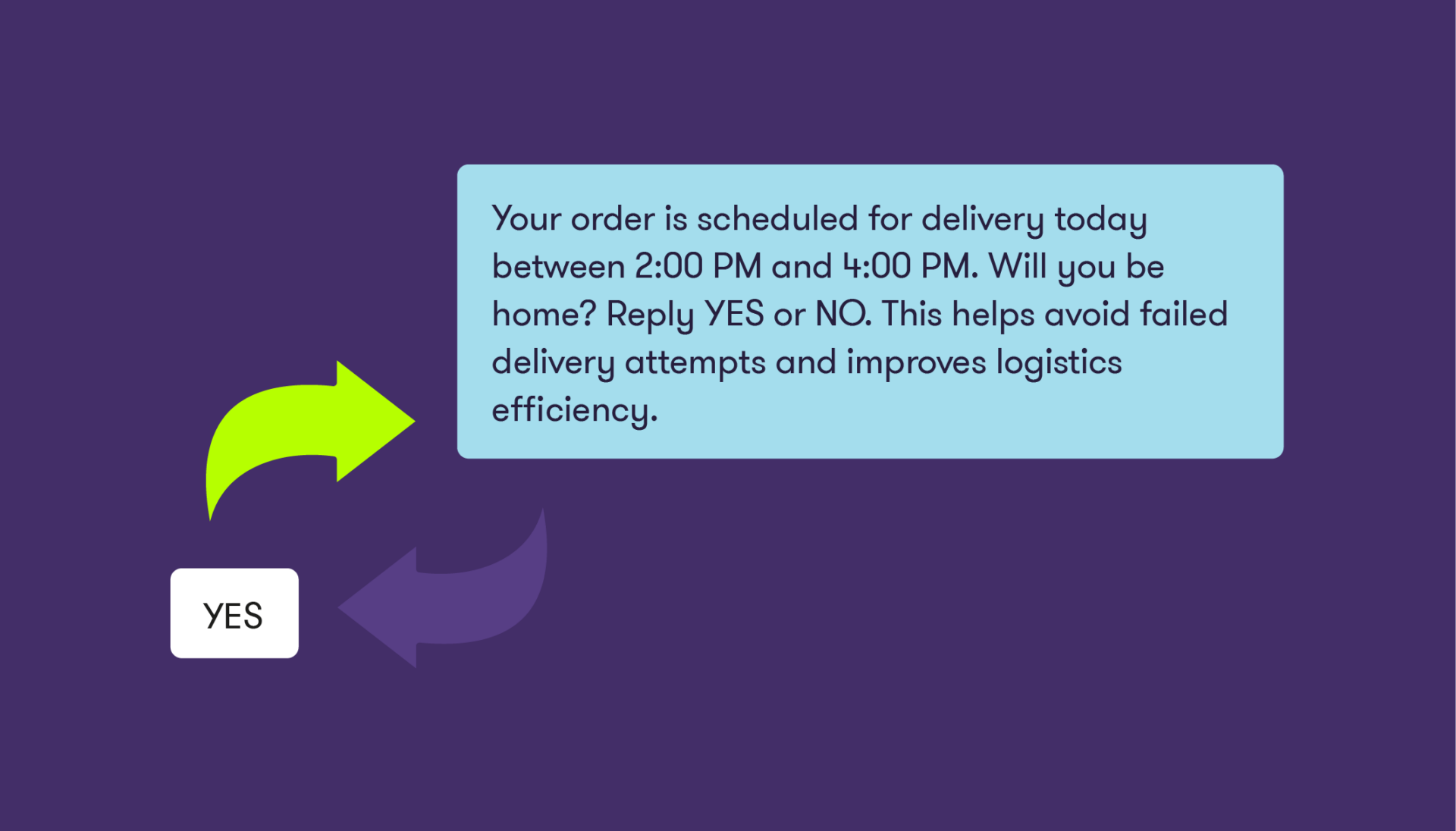
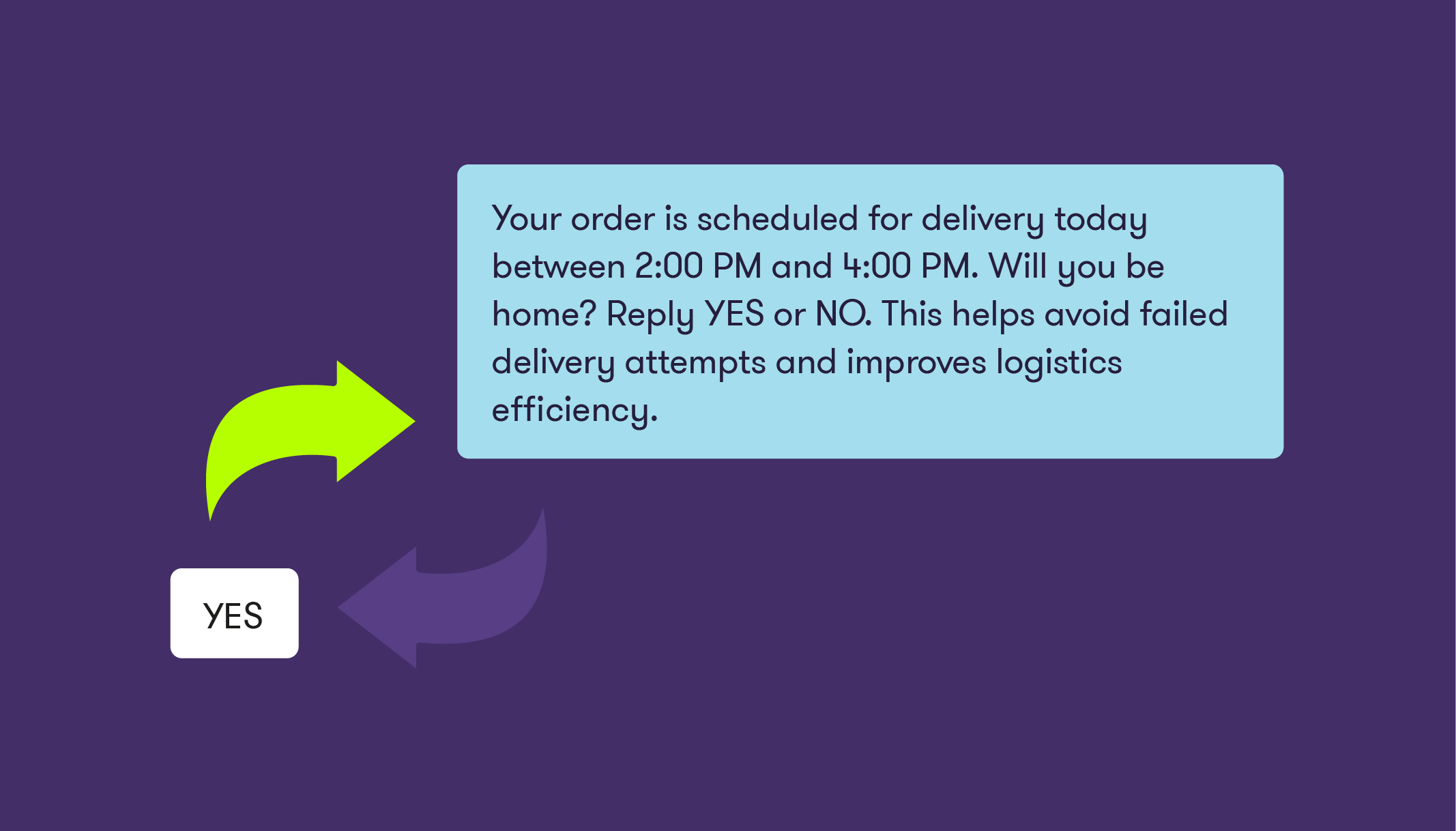
“Your order is scheduled for delivery today between 2:00 PM and 4:00 PM. Will you be home? Reply YES or NO.” This helps avoid failed delivery attempts and improves logistics efficiency.
5. Interactive campaigns and contests
“Join our giveaway! Reply to this SMS with the word WIN to enter.” Great for energizing your contact list and increasing engagement.
How does it work in practice?
Using 2-Way Messaging with a platform like Arpoone is simple. Once a number (short code or long number) is assigned to you by our Account Manager, you can set up your interactive campaign with several options:
- Fallback (pre-enabled): This acts as a safety net (you only have to define it!) for all replies that don’t match any keyword. You can stablish a default response such as “Thanks! We’ll be in touch shortly,” or redirect those replies for manual review.
- Automatic response message: Set personalized messages to be sent when a user replies with a specific keyword, ensuring they feel heard, even when the response is automated.
- Forwarding to an external system (endpoint): If you use a CRM or any other system, you can configure Arpoone to automatically forward responses to that system via API, allowing for easy data handling and automation.
You can also define multiple keywords to segment the campaign and automate the reply for each one. For example:
- Keyword: “YES” → Automatic reply: “Your appointment has been confirmed.”
- Keyword: “NO” → Message forwarded directly to your support team.
Campaign performance is fully tracked in the platform, in real-time. You can view all incoming messages – with or without keywords – and filter by date, sender, or receiver. Need a deeper analysis? Just export the data to a file.
Best practices for a successful 2-Way Messaging campaign
To make the most of this feature, we recommend:
- Keep messages short and clear.
- Use simple or numbered response options (to avoid typos and confusion).
- Test your campaign before going live.
- Always send a confirmation or response back to the user (even if automated).
- Analyze the results and adjust your future strategy accordingly.
We live in the age of two-way communication. Today’s consumers expect speed, simplicity, and interaction. Ignoring these expectations means missing out on opportunities. With 2-Way Messaging, you can level up your communication strategy and stand out through efficiency and closeness.
Arpoone as your enabler
We believe communication is more than just sending messages, it’s about building relationships. That’s why we’ve designed powerful interactive SMS features in the Arpoone platform to help you put your customer at the center of your strategy.
With an intuitive interface, automation options, dashboards and full GDPR compliance, we make sure your campaigns are easy to manage, effective, and secure.
Book a demo or try our free plan to take your marketing to the next level.